
Toddler Alphabet Puzzle: How to Choose One and Play Together
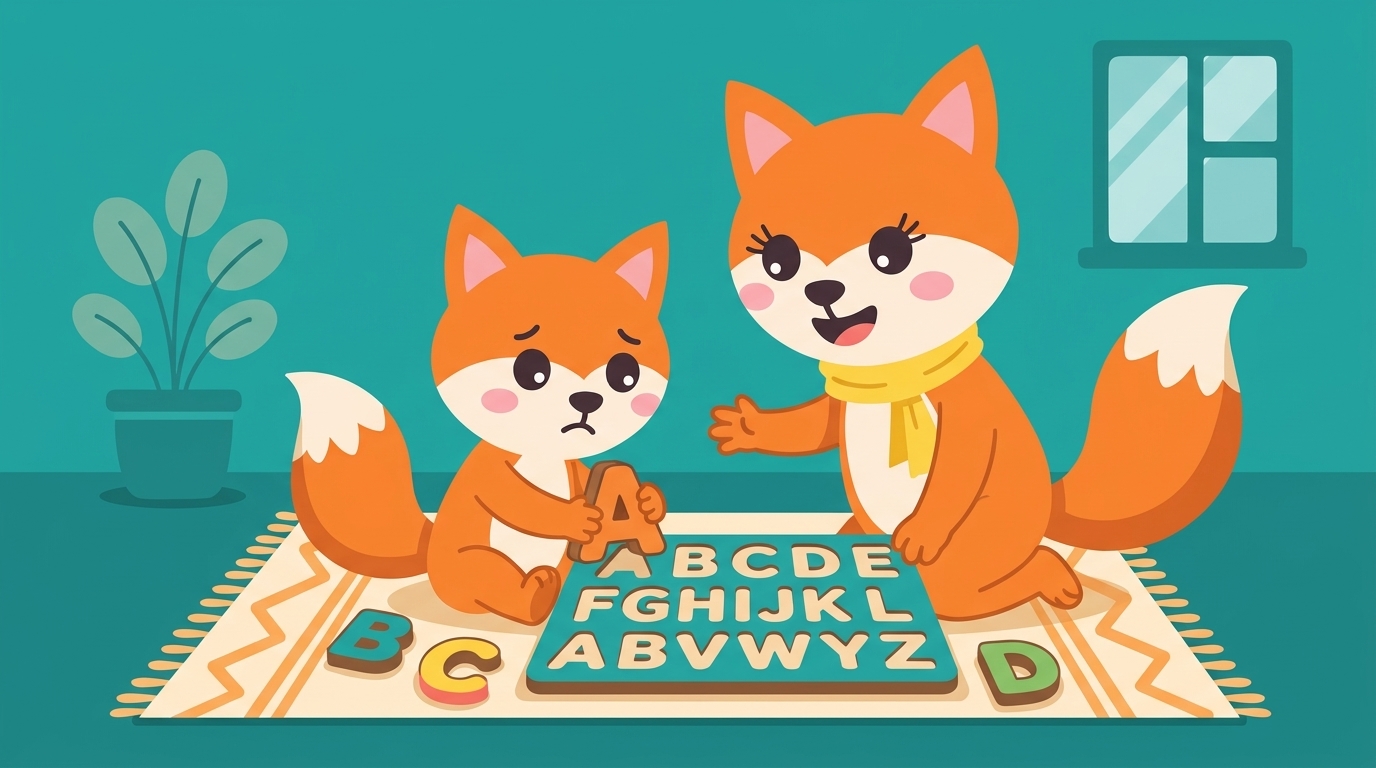
A good toddler alphabet puzzle has big, chunky pieces, clear letters and a picture for each one. Start with four to six letters, say each name aloud, and let your child lead. Keep sessions short and relaxed. The goal is to enjoy letters together, not to finish the alphabet.
An alphabet puzzle can be a lovely first step into letters. The pieces are easy to hold. The shapes give your child something to touch and turn. At the start, there is no right or wrong way to play.
Here is how to choose one, and how to use it so it feels calm for both of you.
What should I look for in a toddler alphabet puzzle?
Not every puzzle suits every child. Check a few simple things before you buy.
- Big, chunky pieces. Small hands grip these more easily. Many toddler puzzles have little knobs or pegs on top.
- Clear, simple letters. Look for bold letter shapes with space around them. Busy patterns make letters hard to spot.
- A picture for each letter. An apple for A or a cat for C gives you something to talk about.
- A tray or frame. A board with a cut-out for each piece shows your child where it goes. That means fewer frustrated moments.
- Sturdy material. Thick wood or heavy cardboard handles drops, chewing and enthusiastic stacking.
- The right age label. Read the age guidance on the box. Check the pieces now and then for cracks or loose parts.
Not sure? Start with a puzzle that has fewer pieces. You can move up later.
Which type of alphabet puzzle works best for toddlers?
There are four common kinds. Each has its own feel.
- Peg puzzles. Each letter has a small knob. They suit young toddlers because fingers get a clear place to hold.
- Letter-shaped inserts. The piece is shaped like the letter. Your child can trace the edge with a finger before placing it.
- Floor puzzles. These have larger pieces that join together. They suit children who like to spread out on the rug.
- Foam mat puzzles. These are soft, interlocking tiles with letters on them. They are easy to wipe clean and carry from room to room.
There is no single best type. Watch what your child reaches for, and go with that.
How do I introduce an alphabet puzzle to my toddler?
Keep it light. Here is a simple way to begin.
- Take out just a few pieces. Four to six letters is plenty. Leave the rest in the box.
- Sit beside your child. Let them look at and handle the pieces first.
- Name one letter. Say, "This is B. B for ball." Then pause.
- Let them try. A piece in the wrong place is fine. Gently turn it, or say, "Let's try it this way."
- Stop while it is still fun. Five minutes can be enough. You can come back tomorrow.
Some children chew the pieces, throw them or carry them around instead of placing them. That is a normal way to explore. Stay close and try again another day.
What games can we play with alphabet puzzle pieces?
Once your child is comfortable, the puzzle can be more than a fit-the-piece game. Try these.
- Find the letter. Put three pieces on the floor and ask, "Can you find M?"
- Hide and seek. Tuck one piece under a cushion. Ask your child to find it and say its name.
- Name match. Pick out the first letter of your child's name. Then try a family member or a pet.
- Sound and picture talk. Hold up a piece and ask, "What else starts with this letter?" Silly answers are welcome.
- Letter hunt. Carry a piece around the house. Look for something that starts with the same letter.
- Sort by shape. Group letters with straight lines, like T and L. Group letters with curves, like O and S.
These games practice looking closely, matching and talking together. They do not need to be quick or correct.
How can I keep alphabet puzzle time calm and pressure-free?
Some days your child will be keen. Other days the puzzle will sit untouched. Both are fine.
- Follow your child's lead. If they love one letter, stay with it.
- Use a warm, easy voice. Say "You found it!" rather than "Good, now the next one."
- Skip the quizzing. Naming letters for your child helps just as much as asking them to name letters.
- Keep the puzzle on a low shelf where they can see it and choose it themselves.
- Mix it up. A little puzzle time, then a story, then a snack is a nice rhythm.
What can we do alongside an alphabet puzzle?
A puzzle gives your child letters to hold. Other activities let them see letters on paper and make marks of their own. Drawing, tracing and coloring all sit nicely next to puzzle play.
For the quiet part of the day, try Color & Learn with Kiko: A to Z Adventure!, an alphabet coloring book for ages 2 to 5. Each letter page has one big, simple picture, a first word, letter tracing, counting, color words and a question for you to ask. It is a gentle way to keep talking about letters after the puzzle is back in the box.
Want more ideas? Read our guides to choosing a toddler alphabet book, toddler alphabet coloring pages and learning the alphabet through drawing.
A few other easy ideas:
- Draw big letters in a tray of sand or oatmeal.
- Spot letters on cereal boxes, street signs and store windows.
- Read an alphabet picture book and let your child turn the pages.
- Use chunky crayons and scrap paper for scribbling.
How do I store and care for an alphabet puzzle?
A little care helps the puzzle last for younger siblings, too.
- Keep the pieces in a cloth bag or a small box with a lid.
- Count the pieces when you tidy up. Let your child drop them in one at a time.
- Wipe wooden pieces with a slightly damp cloth, then dry them well.
- Rotate puzzles. Put one away for a couple of weeks, then bring it back. It often feels new again.
An alphabet puzzle is a simple toy, and that is its charm. A few letters, a little time together and no pressure is a good place to start.
Frequently asked questions
What age is a toddler alphabet puzzle for?
Many are made for toddlers and preschoolers, but the right age depends on the puzzle. Check the age label on the box. Choose a piece count and size that suits your child.
How many letters should we start with?
Four to six is a comfortable start. Keep the other pieces in the box. Add more when your child seems interested.
Should I choose uppercase or lowercase letters?
Either is fine. Many puzzles use uppercase because the shapes are simple and distinct. Some include both, which can be nice to explore together.
My toddler just wants to chew or throw the alphabet puzzle pieces. What should I do?
That is a common way for young children to explore. Stay close, keep it short and try again another day. Always follow the age guidance on the box.
Do we need to put an alphabet puzzle together in A to Z order?
No. Let your child pick any piece they like. Starting with the letters in their name often feels more fun than going in order.
How long should an alphabet puzzle session last?
Short is fine. Five to ten minutes is plenty. You can stop sooner if your child loses interest.
What can we do if my child gets frustrated with a puzzle?
Take a breath and offer a little help, such as turning the piece so it faces the right way. Or put the puzzle away and try again later.