
Learning Letters A to Z: Simple Ideas for Toddlers and Preschoolers
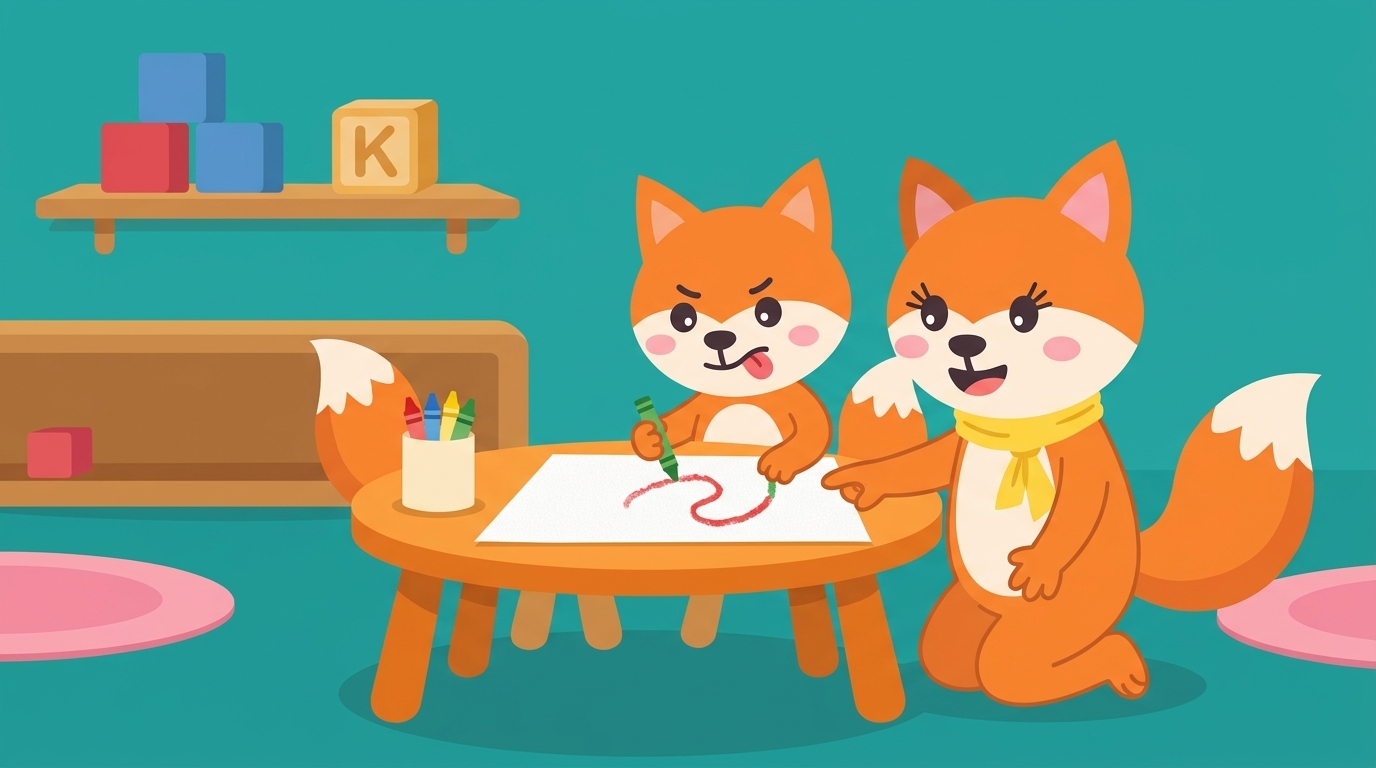
Young children can practice A to Z through short, playful, repeated activities: singing the alphabet song, pointing out letters in everyday life, tracing shapes with a crayon, and naming things they see. Keep sessions brief, follow your child's interest, and celebrate effort rather than speed.
Learning the alphabet can feel like a big job, for you and your child. The good news is that it fits into ordinary days. Kiko the Little Fox likes to say that every letter has a friend waiting to be found, and the same idea works at home.
How can I practice the alphabet every day?
Small, regular moments work better than one long lesson. Try these:
- Sing the alphabet song during bath time or the car ride. Pause before each letter and let your child fill in the gap.
- Spot letters in daily life. Look for the first letter of your child's name on mail, cereal boxes or street signs. Say the letter out loud and ask, "Can you find another one?"
- Name things by their first letter. "Ball starts with B. What else starts with B?" Keep it light.
- Use your voice. Make the sound of a letter and the picture it goes with, such as "m, m, mmm, like milk."
The American Academy of Pediatrics encourages families to read and talk together every day. You can find more ideas at HealthyChildren.org, the AAP's parent website.
What activities help with tracing and counting?
Tracing and counting build fine-motor control and number words at the same time. Some easy options:
- Trace in the air or in sand. Use big arm movements first, then move to smaller ones on paper.
- Count while you color. "Let's color three apples red." Count together as you go.
- Hunt for objects. Ask your child to bring you four blocks, two socks, or one spoon.
- Make letters with your body or playdough. Stand tall for an I, or make a curve with your arms for a C.
There is no need to get every stroke perfect. Wobbly lines are a normal part of practice. For more hands-on ideas, read learning the alphabet through drawing.
How do I keep it fun when my child loses interest?
Attention spans at ages 2 to 5 are short, and that is okay. Stop while your child still wants more. Let them choose the next letter sometimes. Praise specific effort, such as "You held the crayon all the way around the O," rather than only saying "good job."
If you have questions about how your child is developing, the CDC's Learn the Signs. Act Early program offers free milestone checklists you can review at your own pace.
Where does a coloring book fit in?
A coloring book gives your child a calm, hands-on way to meet each letter. Color & Learn with Kiko: A to Z Adventure! has one letter page for each letter from A to Z. Each page has a big, simple picture, a first word, letter tracing, counting, color words and a question for you to ask your child.
Want to try one page first? Download the Letter A coloring page and see how it works with your child.
The book works well as one part of a daily routine, alongside songs and everyday spotting.
Frequently asked questions
What age is best for learning letters A to Z?
Many children start noticing letters between ages 2 and 5, but every child moves at a different pace. Keep activities short and playful, and follow your child's interest.
Should I teach uppercase or lowercase letters first?
Either can work. Many families start with uppercase because those letters are often easier to spot on signs and in books. Use whichever feels natural for your child.
How long should a letter practice session last?
For this age, a few minutes at a time is plenty. Stopping while your child is still engaged often makes the next session easier.
What if my child is not interested in letters yet?
That is common and fine. Try songs, stories and everyday words instead of drills, and come back to letters later. If you have concerns, the CDC's Learn the Signs. Act Early program has milestone checklists to help you think them through.