
Letter Learning Activities for Toddlers at Home
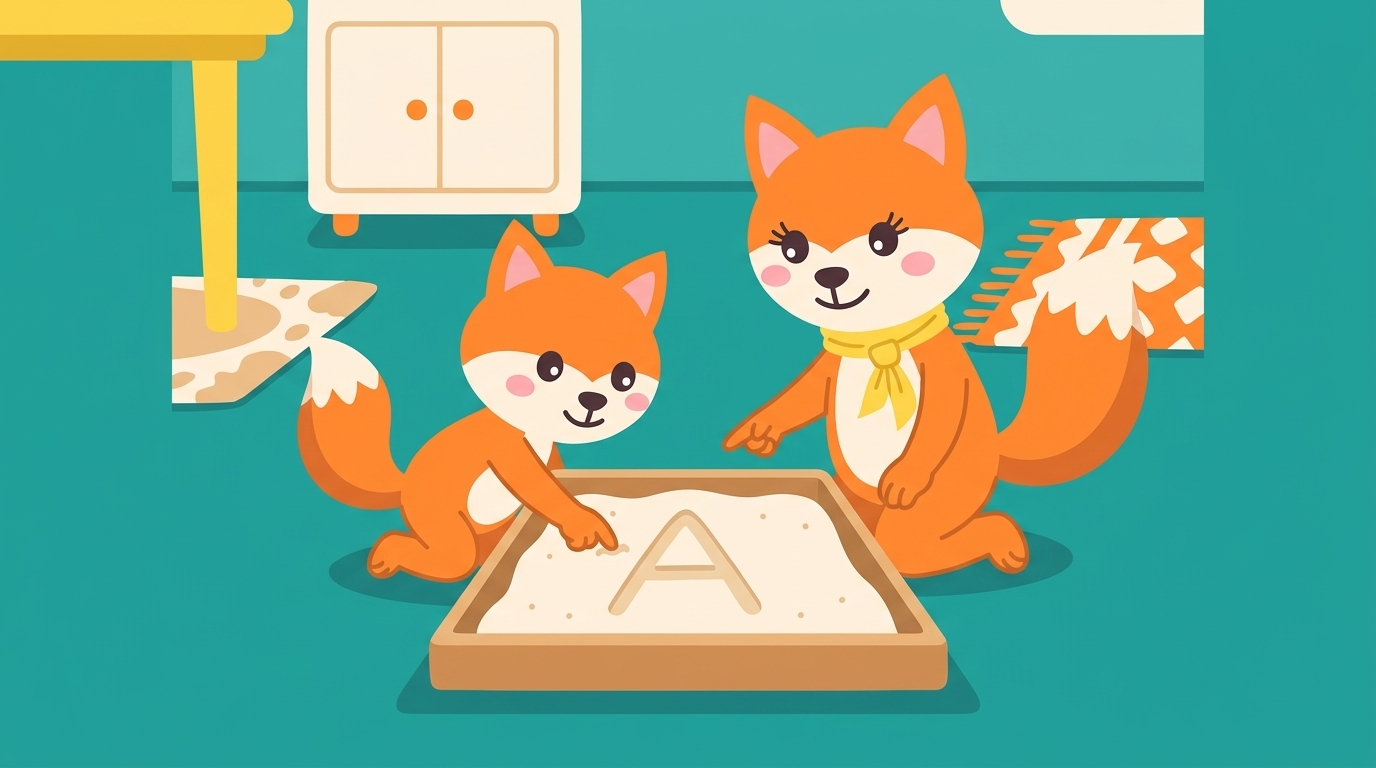
The best letter activities for toddlers are short, playful and hands-on. Point out letters in everyday life, say each letter's sound, sing the alphabet song, and trace letters in sand or play dough. Keep sessions brief and end while your child is still interested.
What simple letter activities can you try at home?
Start with letters your child already sees. Point out the first letter of their name on a cup or cereal box. Say the sound, not just the name, such as "mmm" for M.
Other easy ideas:
- Sing the alphabet song and pause before each letter so your child can fill in the gap.
- Trace letters in sand, shaving foam or a tray of salt with a finger.
- Go on a letter hunt during errands. Look for an S on a stop sign or an O on a cereal box.
- Shape letters with play dough, pipe cleaners or blocks.
Why do hands-on activities work well for toddlers?
Young children learn by moving, touching and talking. The American Academy of Pediatrics encourages families to talk, read and sing together every day. Letter games fit naturally into those moments.
Can a coloring book support letter practice at home?
A coloring book gives your child a calm, focused task with one letter on the page at a time. Color & Learn with Kiko: A to Z Adventure! has 26 single-sided letter pages. Each page pairs a big, simple picture with a first word, letter tracing, counting from 1 to 8, color words and a question to ask your child. Kiko the Little Fox meets a new friend on every page, so the A to Z journey feels like a story.
The book practices letter recognition, tracing, first words, counting, color words, fine-motor control and talking together. It does not promise faster learning. Think of it as one more way to spend time on letters together.
To see how one letter page works, try the Letter A coloring page.
How long should a letter session last?
Keep sessions short and light. A few minutes is often enough. Stop while your child still wants to continue, and come back another day. Let your child choose the letter when you can.
For more ideas, read Learning the Alphabet Through Drawing.
When should you talk to a doctor about your child's development?
Every child grows at their own pace. If you have questions about how your child is developing, talk with your child's doctor. The CDC's Learn the Signs. Act Early program offers free milestone checklists you can review together.
Frequently asked questions
What age are letter activities suitable for?
Many simple letter activities suit children aged 2 to 5. Choose sounds, shapes and tracing tasks that match your child's interest and attention span.
Should I teach letter names or letter sounds first?
There is no single right order. Many parents mix both by pointing to a letter, saying its name and then its sound. Follow your child's interest.
How often should we practice letters?
Short, regular sessions work well for most toddlers. A few minutes a day, or a few times a week, is enough. Stop when your child loses interest.
What if my child is not interested in letters yet?
That is common at this age. Keep letters playful, read and sing together, and let your child lead. If you have concerns, talk with your child's doctor.